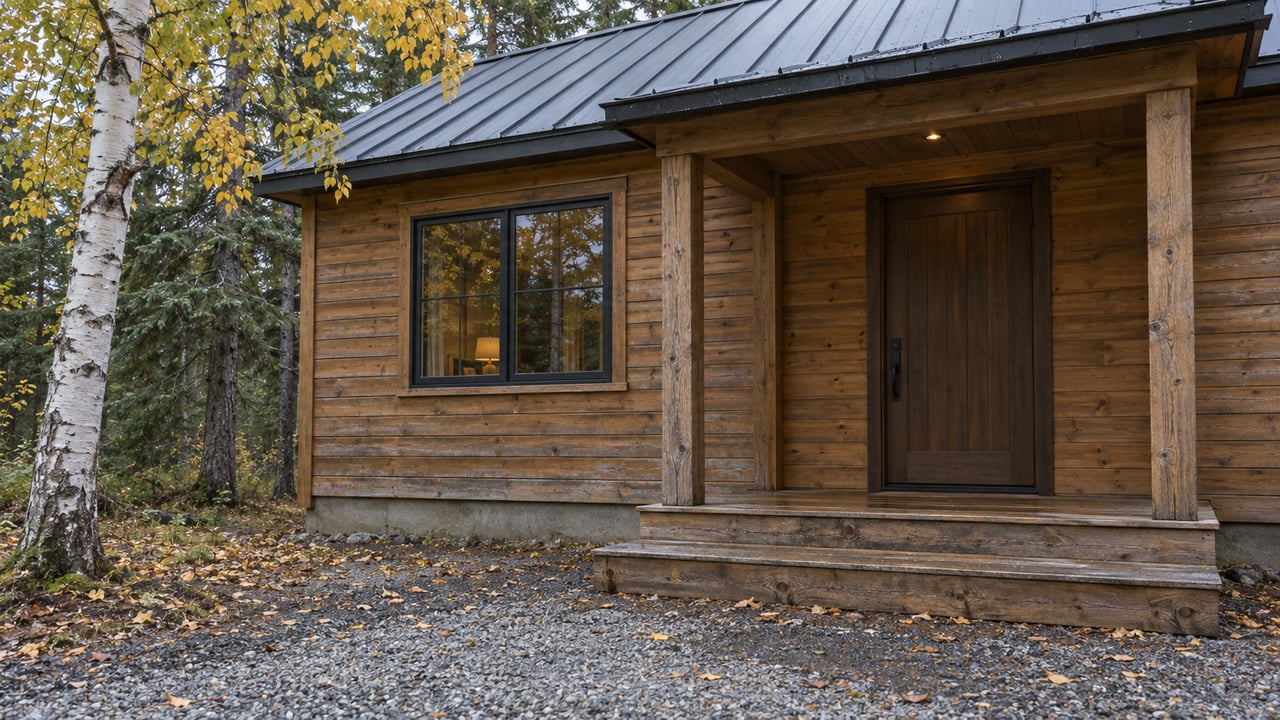
What Willow's Real September Rush Actually Looks Like
October 1, 2026
October 1, 2026
Ask someone who lives in Willow when the town gets busy and they will probably say January, when the Willow Winter Carnival pulls in somewhere between 3,000 and 4,000 people over two weekends and roughly doubles the population overnight. That answer is not wrong. It is just incomplete. The three or four weeks that just wrapped up, the ones sitting between the third week of August and the third week of September, run their own kind of rush through town, and almost nobody gives it a name.
It does not look like a festival. There is no schedule posted at the Willow Community Center, no volunteer roster, no vintage sled show. It looks like more trucks on the Parks Highway with coolers in the bed, more people parked along Willow Creek checking a regulation booklet, and a set of fishing rules that flipped on September 1 whether anyone noticed or not. That overlap, hunting season closing in on its peak at the same moment the creek's rules tighten, is the closest thing Willow has to a second high season, and it just finished.
Willow sits inside Game Management Unit 14A, one of the road-accessible units the state groups together with the rest of the Mat-Su Valley and the Susitna drainage. The general moose season in these nearby units runs approximately August 20 through September 20, though the exact dates shift by subunit and can be adjusted by emergency order. That window closed around September 20.
The timing is not incidental. The rut, when bulls stop hiding in cover and start crossing open ground chasing cows, typically peaks during the first week of September. That is the stretch when road hunting actually produces results, and it is also the stretch when the Parks Highway corridor through Willow carries the heaviest load of hunters moving through on their way to public land, because the highway offers direct truck and ATV access into GMU 14A without a float plane charter.
Willow Creek itself is not just scenery in this story. It is infrastructure. Two of the specific moose hunts registered in this unit, listed by the state as DM406 and DM470, use Willow Creek as one of the actual boundary lines drawn on the official hunt area maps. The creek that anglers fish all summer is the same line the state uses to define where a hunter can legally take an antlerless moose in this part of the valley.
While the hunting season was building toward its peak, the fishing rules on that same creek were tightening. Starting September 1, most flowing waters in the Mat-Su Valley switch to single-hook only, with treble and multiple hooks no longer allowed, and bait gets cut out of the equation entirely. Willow Creek and Montana Creek go further: both become catch-and-release only for rainbow trout and grayling, with one narrow exception upstream of the Parks Highway bridge, where a single rainbow under 16 inches can still be kept per day.
The creek does not go quiet right away, either. Willow Creek and Montana Creek usually still see a few late silver salmon trickling through mid-September before that run tails off for the year. So for a short stretch, anglers working the last of the silvers under the new no-bait rule are sharing the same stretch of road with hunters working the peak of the rut, both groups converging on a town that does not otherwise look like it is expecting anyone this time of year.
If there is a place in Willow where that seasonal overlap becomes a person rather than a set of regulations, it is CC's Skyfire Kitchen on Beluga Avenue. Kelsielyn Crocker grew up in Willow, left, and came back to open the restaurant with her father. She has talked about what the town's identity means to her mostly in the context of the Winter Carnival, telling Alaska's News Source it is "about the community, it's about family."
That is the sentence Willow tells about itself in January. Nobody has written the equivalent sentence about September, even though the ingredients are the same: people converging on a small town for a shared, recurring reason, filling up the roads and the local business that gives them somewhere to stop. The difference is that the carnival has a name, a 64-year history, and a longtime volunteer in Jim Houston, who founded the Willow museum and has personally worked 62 of the last 64 carnivals. The moose and fish overlap has none of that framing. It happens anyway.
None of this pauses the parts of Willow that run on a monthly clock rather than a seasonal one. The Willow Area Community Organization, known locally as WACO, meets at the Willow Community Center on the first Wednesday of the month, and its 2026 minutes show a town handling its own business well outside of any festival or fishing season.
Recent agenda items include:
That riparian initiative is worth sitting with for a second. The same community organization managing parade logistics and board vacancies is also fielding a presentation on protecting the exact waterway that just switched to catch-and-release rules and doubles as a hunting boundary. Willow Creek is not background scenery in any of this. It shows up in the fishing regulations, in the state's hunt maps, and now in the community's own conservation planning, all in the same season.
None of these threads announce themselves the way the carnival does. There is no single Saturday where all of it happens at once, no gate count, no volunteer T-shirt. The Willow Community Center itself, the lakefront facility at mile 69 of the Parks Highway with room for 580 people, sits mostly booked for weddings and meetings this time of year rather than the sled shows and homesteader games that fill it every January.
But the pieces line up close enough in time that a resident driving the Parks Highway through late August and early September is watching two separate regulatory calendars, one for fish and one for game, expire and tighten in the same few weeks, on the same road, along the same creek. A few miles south, Nancy Lake State Recreation Area at Milepost 67.3 adds its own layer, its flat, wetland terrain drawing moose into the open at the same time its paved parkway is still handling the last of the summer's canoe traffic.
Winter Carnival will get its recognition again in January, the way it has for 64 years running. The stretch that just ended did not get a name, a founder, or a T-shirt. It got a highway full of trucks, a creek that changed its own rules on schedule, and a town that kept its parade guidelines and riparian planning moving right through the middle of it, whether anyone was watching or not.
If you have been noticing Willow's rhythms like this, whether it is the creek, the highway, or just what a place actually feels like to live in through each season, I would like to hear about it. Reach out to Your Vision Realty Group any time. Let's Connect.
This article is general information, not legal, tax or financial advice. Consult a qualified professional about your situation.
Stay up to date on the latest real estate trends.
Experience a level of service that is as unique as the homes we represent. Sarah Helgoe offers a tailored approach for those seeking a more refined real estate experience in Anchorage, backed by seven years of impeccable professional standards.